
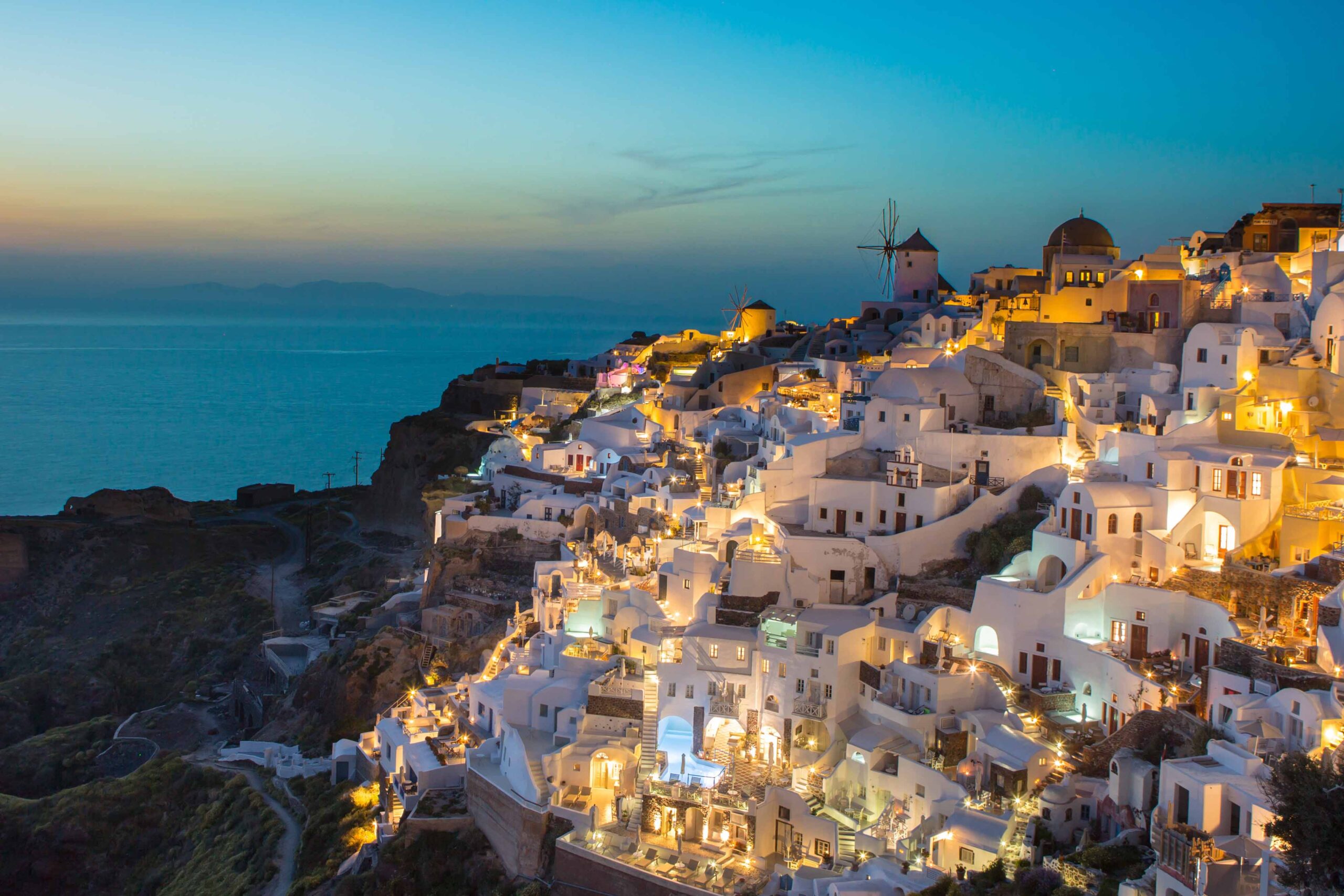
Some recommendations for tourist attractions in Greece not inferior to tours in European areas such as London or Paris. Moreover, this place is famous for its culture and historical tourism on the European continent, which has a very beautiful view. Maybe you are not too familiar with this country which is known to be very thick with history and mythology. Even though Greece has beautiful and stunning tourist attractions like some of the places that we will discuss below.
1. Santorini
Santorini is a circular group of volcanic islands in the Aegean Sea, located 200 km from mainland Greece. This island is part of the Cyclades Islands group. The island has an area of 73 km² and a population of 13,600 people (2001). The island is known for its tourism sector and wine industry. Santorini also has several historical sites and was once an important center of civilization. This very beautiful island on the edge of the Aegean Sea offers panoramic sunsets and housing on a hill.
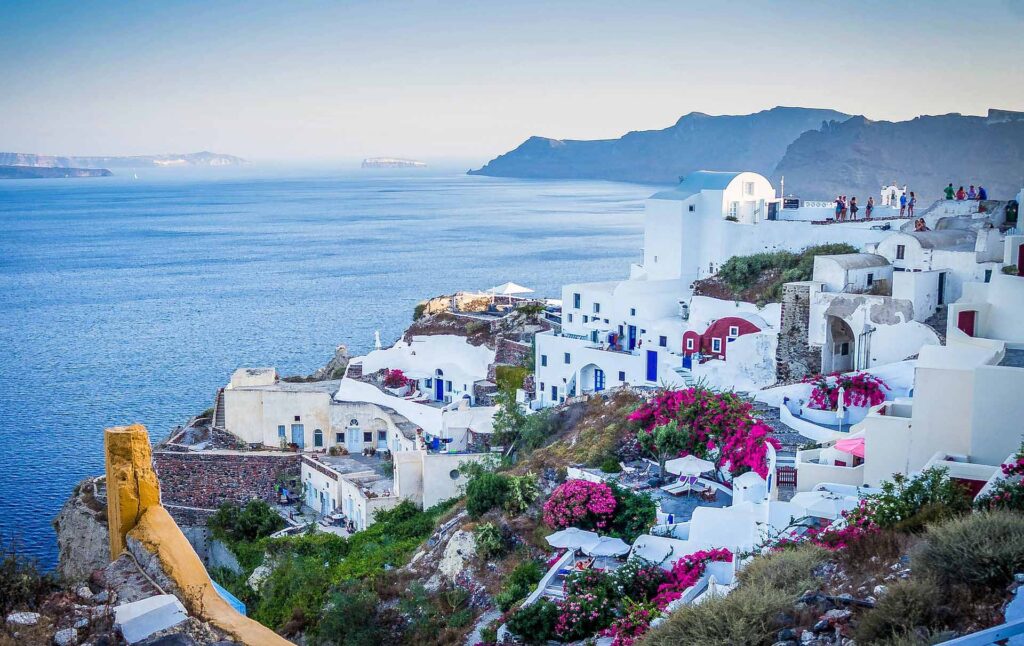
The municipality of Santorini includes the inhabited islands of Santorini and Therasia, as well as the uninhabited islands of Nea Kameni, Palaia Kameni, Aspronisi and Christiana. The total land area is 90.623 km2 (34.990 sq mi). Santorini is part of the Thira regional unit.
The island was the site of one of the largest volcanic eruptions in recorded history the Minoan eruption (sometimes called the Thera eruption), which occurred about 3,600 years ago at the height of the Minoan civilization. The eruption left a large caldera surrounded by volcanic ash deposits hundreds of metres deep.
It is the most active volcanic centre in the South Aegean Volcanic Arc, though what remains today is chiefly a water-filled caldera. The volcanic arc is approximately 500 km (300 mi) long and 20 to 40 km (12 to 25 mi) wide. The region first became volcanically active around 3–4 million years ago, though volcanism on Thera began around 2 million years ago with the extrusion of dacitic lavas from vents around Akrotiri.
2. Mykonos
Not too far from Santorini this place can be reached by Ferry for 3 hours. The highlight is the beautiful view of the white buildings and the mix of Venetian and Cyladic architecture.
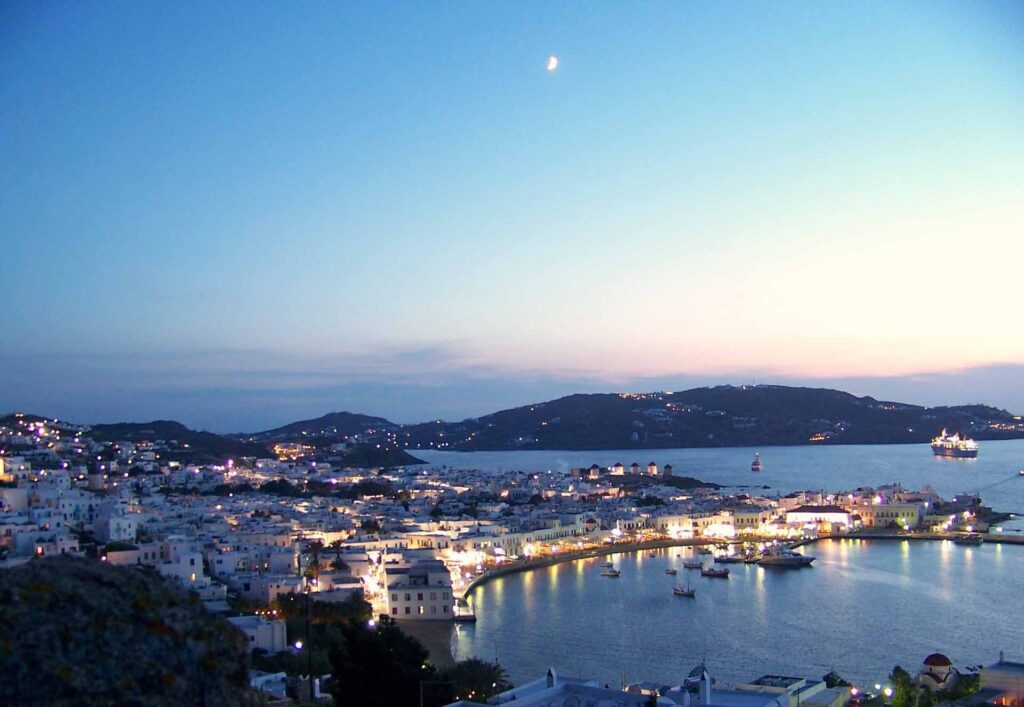
Mykonos has been known as the island of the winds, and it’s located in the heart of the Cyclades group. Its fame has spread across the world, as a cosmopolitan and luxurious holiday destination. Bathed in the bright sunlight of the Aegean by day, she dresses in charm and mystery by night, beckoning its visitors to dance and have fun in the beach bars and clubs, go for a shopping spree in luxury stores, visit its art venues, and -in short- have a truly memorable stay!
There are, however, two faces to this island that not many people know of. The first one is the obviously intense, shiny and cosmopolitan aspect of it, and the other one is particularly picturesque, with stone-paved alleys, whitewashed houses, country chapels and windmills, that ooze calm and peace. What makes this island special is that it can cover a variety of demands: you can visit it for its archaeological sites; get to know the local traditions in its picture-perfect villages; and you can explore its amazing beaches, considered by many as the top ones in the Aegean Sea. Chora is quite an impressive and picturesque Cycladic town. You will find top hotels and resorts, designer clothes and goldsmiths boutiques, art galleries, and some of the most famous restaurants and bars in Greece. For a taste of culture and history, take a boat trip to nearby Delos Island; it’s a big and impressive archaeological site.
3. Parthenon
Don’t tell Greece not to visit this city. The Parthenon is indeed a popular Greek landmark. With views of classic buildings from this temple, you will feel a different sensation.
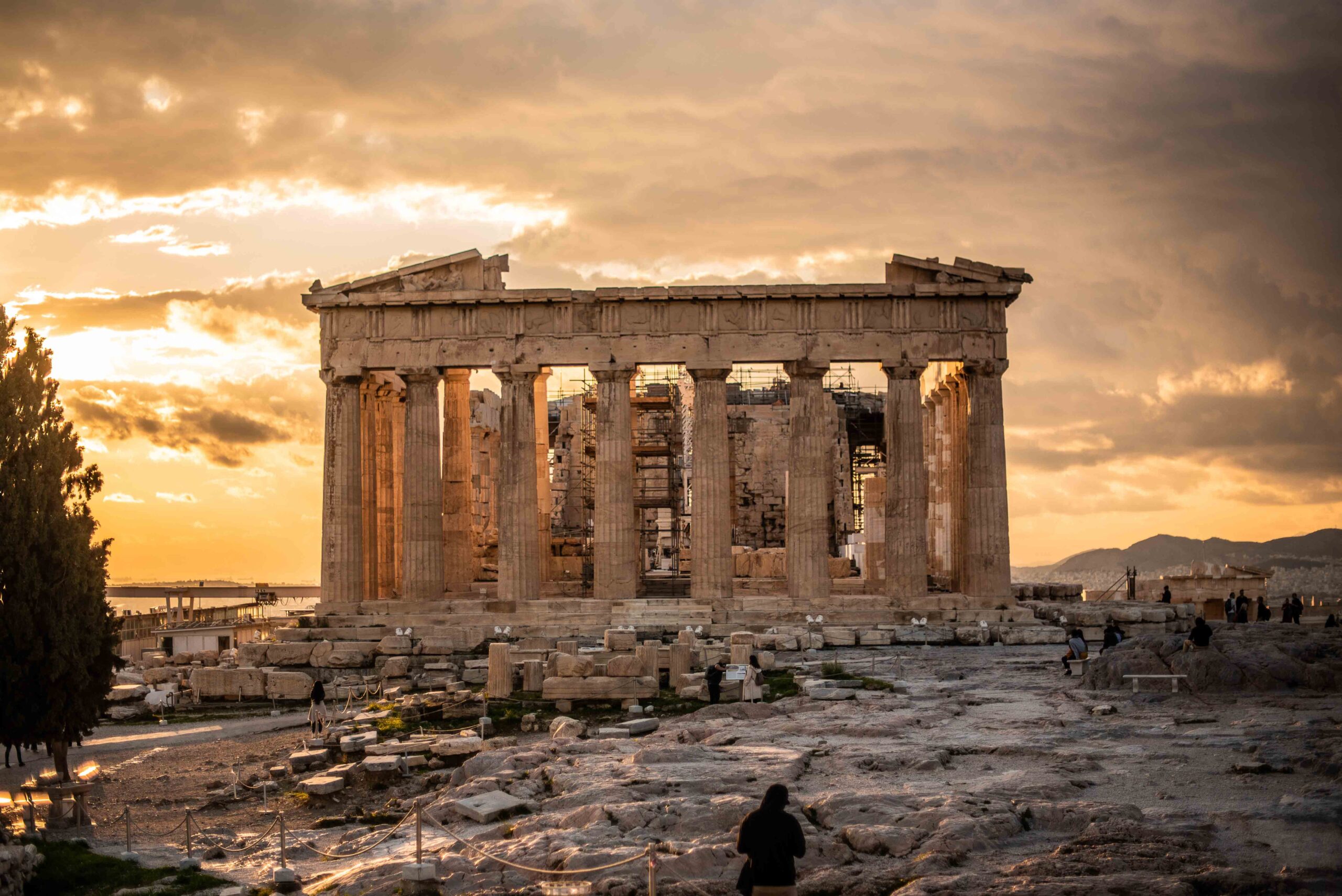
The Parthenon is a resplendent marble temple built between 447 and 432 B.C. during the height of the ancient Greek Empire. Dedicated to the Greek goddess Athena, the Parthenon sits high atop a compound of temples known as the Acropolis of Athens. It was the largest and most lavish temple the Greek mainland had ever seen. Throughout the centuries, the Parthenon withstood earthquakes, fire, wars, explosions and looting yet remains, although battered, a powerful symbol of ancient Greece and Athenian culture. Today, it is one of the most recognized buildings in the world and an enduring symbol of ancient Greece.
4. Karpathos
This place is very beautiful because it offers views of typical Greek classical buildings. Besides that, it also provides views of the clear green sea in turquoise color.
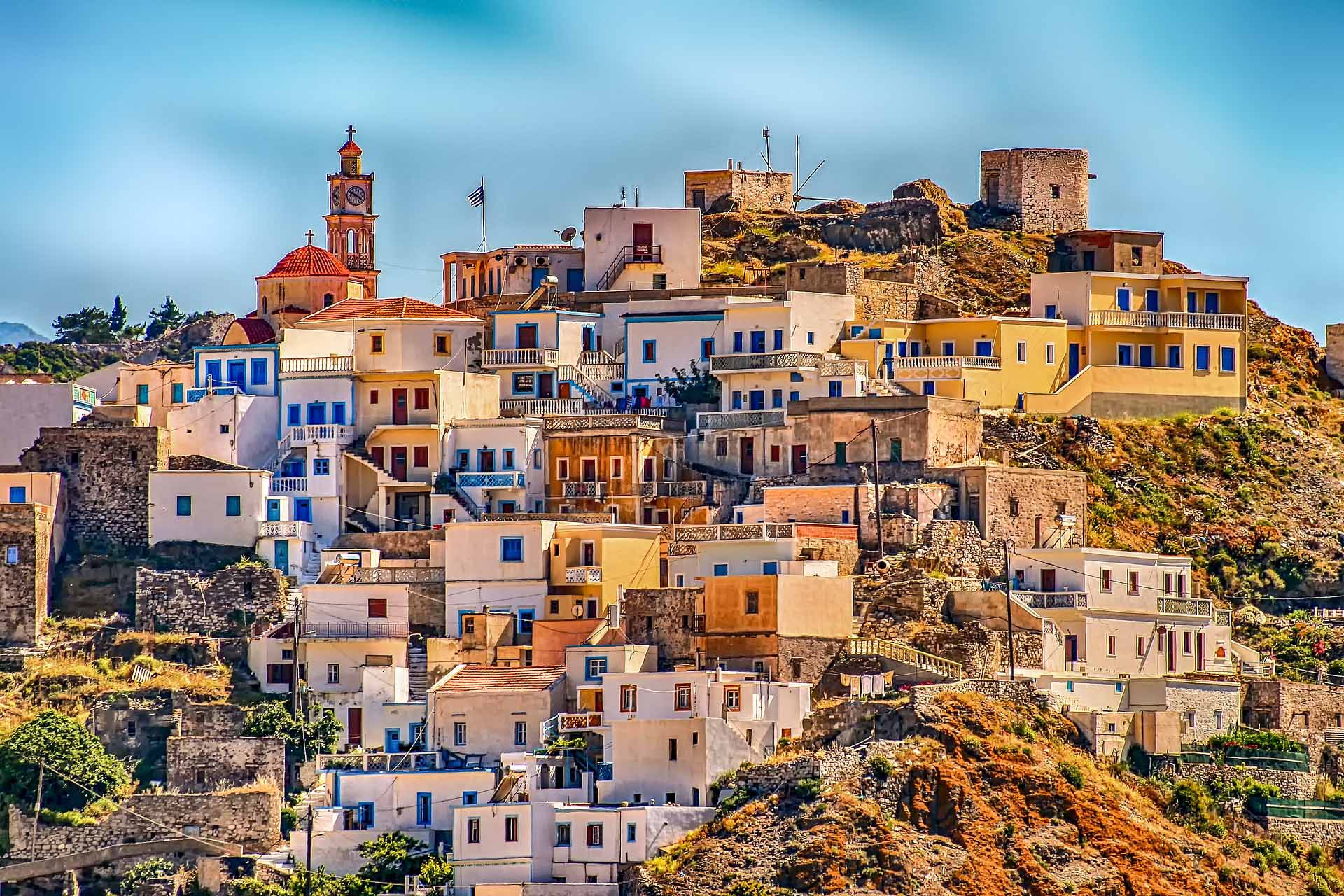
The island of Karpathos is part of the Dodecanese group, which is located on the southeastern side of the Aegean Sea. Karpathos lies between Crete and Rhodes. It is the second largest island of the Dodecanese, with a total area of appreciatively 301 sq km, a shoreline of about 160 km and a length of 49 km. This is a narrow and oblong island, with a maximum width reaching 11 km and a minimum width of 3,3 km. Many traces of local history are spread around the island, such as towers and castle remains.
Its northern and southern parts are separated by the highest peak of Karpathos island (Mount Kali Limni), rising at an altitude of 1,215 meters. Its other high peaks are Mount Profitis Ilias (1168 meters) and Mount Lastos (975 meters).
The geography of Karpathos is unique in Greece, with huge mountains and impressive spots. All the mountains of Karpathos are full of verdant pines and picturesque villages such as Lefkos, Mesohori, Olymbos, Tristomo, and Finiki. The seashores of the island are embroidered and its coastlines are hiding secluded coves and beaches with white sand and azure or emerald waters.
Kyra Panagia, Ambela (or Apella) and Achata are some of those wonderful beaches which are embellishing the island, surrounded by the Mediterranean Sea and the Sea of Crete. The capital of Karpathos is Pigadia, which is also the main (natural) port of the island and is located in the southern part, on the eastern coast. Karpathos has a population of about 6,630 inhabitants.
Karpathos has an airport that serves flights from Athens, as well as a few seasonal flights from abroad every summer. Ferries to Karpathos depart from Piraeus port in Athens, Crete and Rhodes.
5. Delphi Stone Theatre
The attraction is the beauty of the stone theater which is the center of theatrical culture. If you are lucky you can also watch theater performances and Greek artists here.
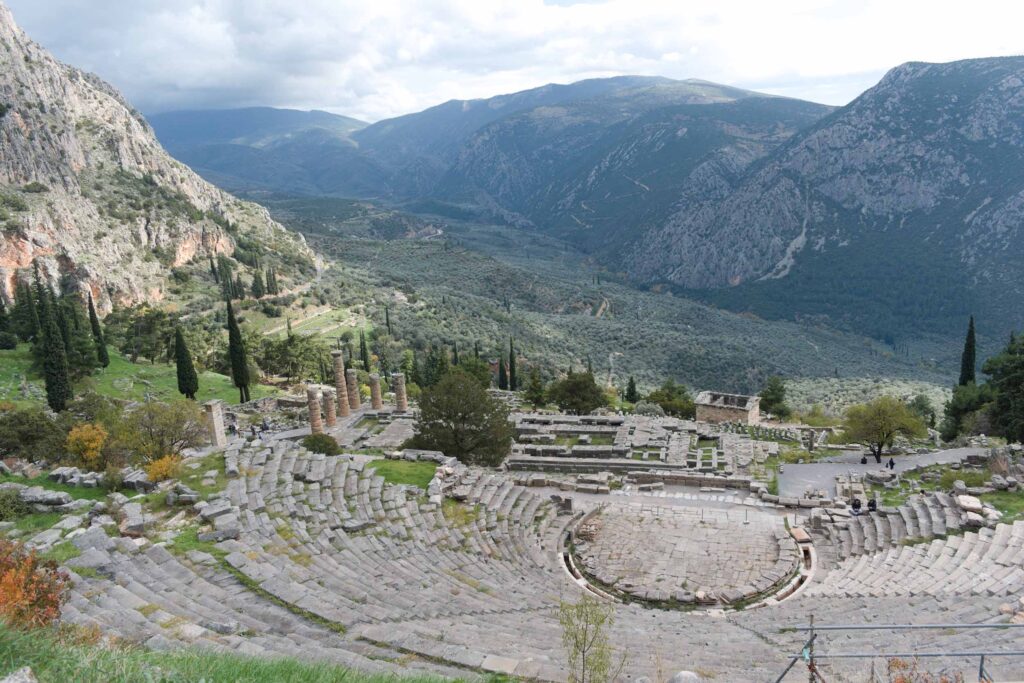
The ancient theatre in the archaeological site of Delphi Greece has been built on the same hill as the Temple of Apollo, but it is located further above it. Its situation provided audiences with a great view of the entire sanctuary and the above olive tree valley. Dating back to the 4th century B.C, the theatre was constructed using the limestone of Mount Parnassus.
The 35 rows of the theatre could seat nearly 5000 people, though the lower seats were constructed in the Hellenistic and Roman periods. The theatre went through many reformations. However, it has kept its basic structures: the stone seats, a round-shaped stage, and an orchestra. Today it hosts many ancient plays and other cultural events, mostly in summer.
6. Athena
Athens is a city surrounded by four large mountains that make it special. As the oldest city in the world, you can not only travel but also learn history.
The Sanctuary of Athena Pronea is located to the southeast of the Temple of Apollo, Delphi. The sanctuary was the first mark of Delphi visible to people coming from the east, before arriving at the Temple of Apollo. This is how came to the name Pronea, which means before the Temple. This sanctuary was particularly important, as people coming to ask for an oracle would first offer a sacrifice at the Athena Pronea, who was considered the guardian of Pythia.
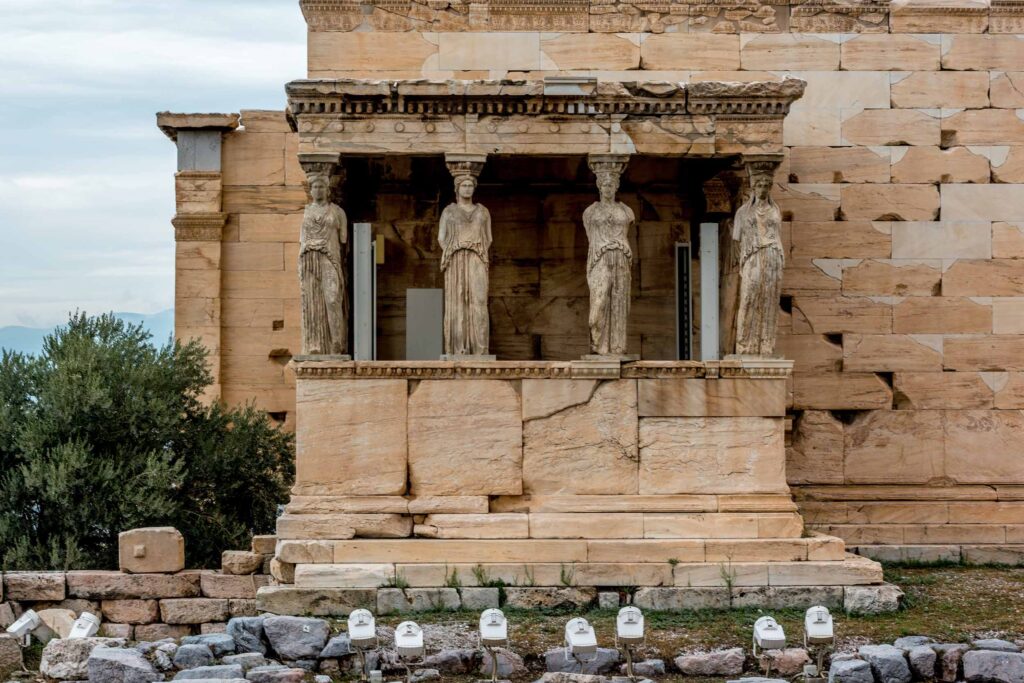
The sanctuary consisted of several altars, temples, two treasuries and the Tholos, a round-shaped construction, which was a pretty unusual shape for the ancient Greek architecture. One of the two treasuries was dedicated by the inhabitants of Marseilles as a thank you for a victory over the Etruscans. In front of the treasuries, there was a trophy to commemorate the victory of the Greeks over the Persians.
The function of the Tholos is not clear. It could possibly be a cult dedicated to a god or local hero, or it could also be a treasury where statues were kept. The tholos was constructed in the 4th century B.C. by architect Theodorus from Phokea, Asia Minor. It was 13,5 m in diameter encircled by twenty Doric columns on the outer side and ten Corinthian columns on the inner side. Only three of the exterior columns have today been restored. The structure was made of Pentelic and Parian marble and the walls were set with a layer of dark Eleusinian stone. The metopes were showing scenes from the War of Titans.
In 373 B.C. a large earthquake made the Phaedriades stones (stones from the cliffs around the ancient site) fall, destroying a large part of the sanctuary. Although there were many efforts for restoration in the years to come, the sacred wars that followed never allowed the reconstruction to finish.
The Temple of Aphaia has been dedicated to goddess Athena and is located on the island of Aegina, on top of a hill. This is one of the ancient architectural wonders of ancient Greece. It was built in 480 BC and 25 of the original 32 Doric columns still stand due to the skill of the restorers. It is situated in a Sanctuary complex in Aegina about 13 km east of the main port.
The temple was built over the ruins of an earlier temple built around 570 BC that existed at the very site but was later destroyed in the fire in 510 BC. The remains of this old temple were filled to get a larger flat terrace on which to build a new temple. This led to the ruins of the old temple to be well preserved. Many painted remnants are still found.
 The possibility of another temple built in the 7th century being located at this site is seen but all agree that this temple was very small and simple in terms of both plan and size. Many figurines belonging to the late Bronze Age have been excavated from this site especially female figurines showing that cult activity existed at this site from 14th century BC connected to a Minoan civilization.
The last temple has an unusual plan and is noted for their beautiful sculpture that shows remarkable progress from Archaic to Early Classical techniques. The sculptures are on display in Glyptothek of Munich and a large collection of fragments are located in the museums at Aegina on the site.
Historical evidence points to the fact the people of Aegina by the second millennium were already worshipping a deity at this site. By the end of the second millennium, the Dorians colonized Aegina and they continued the worship of the goddess. During the Greek period worship of Aphaea began. The legend has it that Aphaea escaped the clutches of sailors near the coast of Aegina and was seen going up till she vanished and hence the name Aphaea meaning vanish. Aphaea is said to be a mountain and a hunting goddess who protects shipping. Aegina was an important shipping area of the region.
The maritime prosperity of Aegina during the sixth and fifth century is the reason for the beautifully built Temple of Aphaia at Aegina. There were many theories regarding the temple of Aphaia. When initially discovered in the 18th century after years of oblivion and disuse, it was thought to be the temple of Zeus Panhellenius and was then attributed to Athena. Only later when a relic containing a relevant inscription was found, the temple was attributed to Aphaia.
The sanctuary here consists of many buildings, not just the temple. The temple lay at the center of the enclosing walls. A large altar with paved pathway and a ramp leading to the temple was found east of the temple. Four bases, two on either side of the ramp are seen. These were probably meant for statues. The altar was used to burn offerings. On either side of the alter are found foundations of two buildings which may have been open buildings to house more statues.
In the northern side is a cistern to collect rainwater from the roof of the temple. Near the cistern is found a large column with a sphinx on top. It was believed to have been built around 600 BC and the height of the column is about 14 meters. It is the only remains of the older sanctuary that existed there. The sanctuary was situated on a flat terrace. At the entrance towards the south was a columned gateway. The southeast building seems to have been used for administrative purposes.
The temple had 32 columns twelve on each side and six at the front and back. The columns on the sides incline inwards slightly (about 3/4 inches) to lend greater strength to the building. And the columns at the angles are about ¾ inches thicker than the others. Limestones found in Aegina were used to build the present temple and they were covered with a thin layer of stucco that was richly painted.
The upper parts of the temple are more colorful than the lower part. These are painted in bright shades with horizontal elements in red and vertical in black. Carved wooden plaques that were painted or embellished with bronze relief may have filled the metopes on the frieze. The upper surfaces of the horizontal cornice were usually painted in red representing earth and the background in cobalt blue to represent the sky. The temple constructed at the archaic period displays both archaic and classical styles.
The architecture of the temple is in the Doric style but the influence of Ionic architecture is prominently seen. It is said that the slender line of the columns lends a sense of soaring lightness which is a hallmark of Ionic architecture. Among the most remarkable and interesting features of the Temple of Aphaia are the three pediment groups of the temple. They consist of two east groups and one west group. One of the east group and the west group belongs to the same period and was created around 500 to 510 BC. The second east group shows it was made about 20 years later.
The pediments depict scenes of battles fought by Aeginetan heroes during the first and second wars against Troy. The goddess is seen in the center looking ahead in both east and west groups. Not much information is found on the various sculptures that were mounted in the buildings flanking the sacrificial altar. Set up on the east side of the temple are two groups of sculptures, a few statues simply called the warrior groups and sculpted most probably by the west pediment master sculptor.
The statue of the deity Aphaia is believed to have been erected at a position less than central; a stone base found in the northwest corner in the cella may have held a wooden statue of Aphaia. In the center of the same cella presumably stood another statue of the goddess which was set on a base and surrounded by a wooden railing.
7. Andros
Andros is a beautiful island that should not be missed when visiting Greece. With views of the turquoise sea and clean beaches are the main attraction for this island.
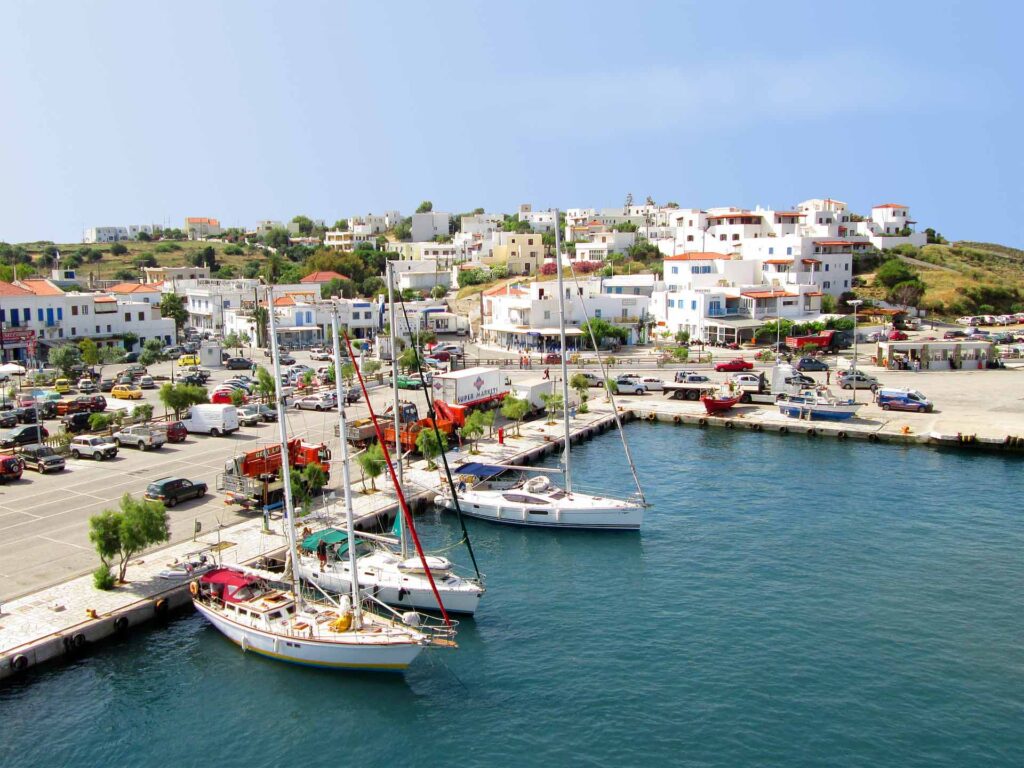
With its wonderful nature, cosmopolitan main town, traditional villages and amazing beaches, Andros island is an all time favorite when it comes to stunning gateways from Athens! In fact, it is among the nearests Cycladic islands to the Greek capital.
Andros is only located a couple of hours away from one of the ports of Athens (Rafina) by ferry. Ferries also connect it to other Cycladic islands, such as Mykonos, Paros, Naxos and Syros, offering an ideal opportunity for island hopping!