

In Pangandaran there are two Japanese Cave sites, the first is in a protected debt area (Nature Reserve), then the second is located in the Rancakalong area, Karangsari, Putrapinggan Village. Both of them had the same function, namely as a bunker and bastion for the DAI NIPPON (Japan) army during World War II. The bunker is in the form of lookout holes facing the sea which is meant to oversee the landing of allied troops.
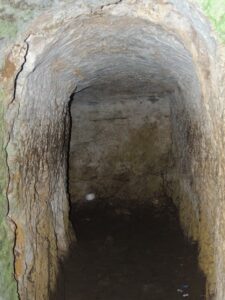 During World War II, after the Dutch Colonial invaders left Indonesia in 1942, Japan entered several Indonesian territories, including Pangandaran. The Japanese Cave in the Pangandaran Nature Reserve Area was for a period (1941-1945), at that time the Dai Nippon Army occupied the entire island of Java and Madura, the construction of the Japanese Cave was carried out by forced laborers (Romusa) for ± 1 year, and until now the Japanese cave in the Pangandaran Nature Reserve area has never been renovated, so its authenticity is still visible.
There are 3 Japanese Caves in the Pangandaran Nature Reserve area, one of which has a hole 10 meters deep with lookout holes about 1 meter deep.
The Japanese Cave in Rancakalong was made by sculpting a hill. Inside the cave there are also several small rooms, which may be a place to store weapons. Apart from that, the small room in the bunker was used as a hiding place for the Japanese Dai Nipon soldiers
The existence of a bunker left by the Japanese army in Pangandaran still leaves a question mark as to what the Japanese motive was for building defenses in the south sea.